LoonieWallet LoonieWallet
  • Home
  • Blog
  • Calculators
    • About Us
    • Privacy Policy
    • Affiliate Disclosure
    • Terms
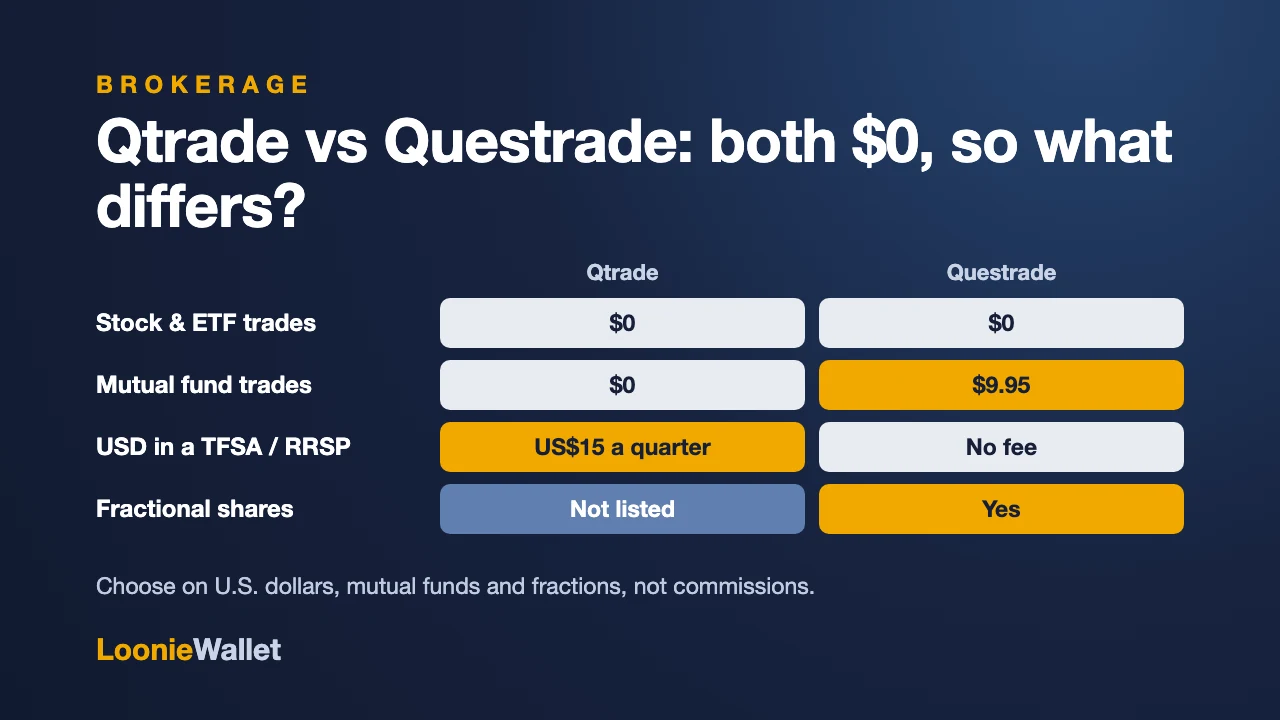
  • Qtrade and Questrade fee table: both $0 for stocks and ETFs, but mutual fund trades, U.S. dollars in registered accounts and fractional shares differ
    LoonieWallet Team · Brokerage

    Qtrade vs Questrade: Both Charge $0 to Trade, So What Actually Differs

    Questrade went to $0 stock and ETF commissions in February 2025 and Qtrade followed in October 2025. What still separates them: U.S.-dollar costs, fractional shares, mutual funds, options, Norbert's Gambit, transfer rules and who each platform suits. Verified pricing and five investor scenarios.
    • Brokerage
    • Qtrade
    • Questrade
    • Investing
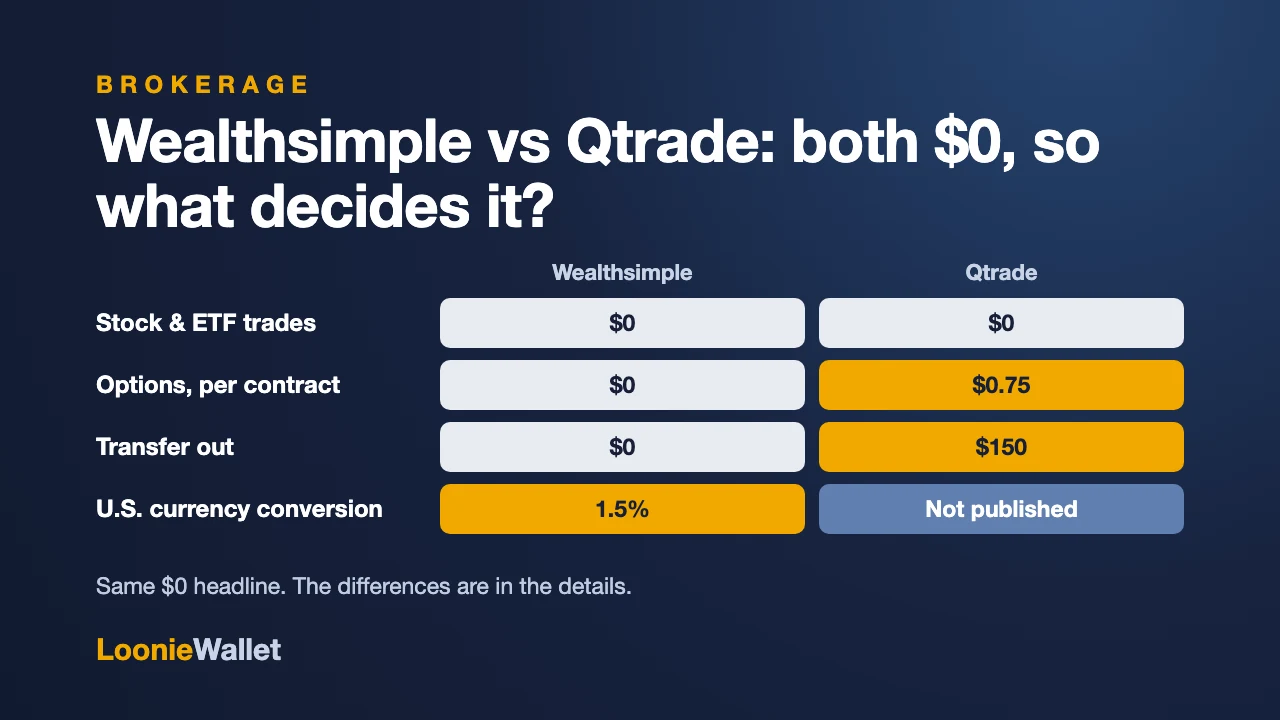
  • Wealthsimple and Qtrade fee table: both $0 for trades, but options, transfer-out and U.S. currency conversion differ
    LoonieWallet Team · Brokerage

    Wealthsimple vs Qtrade: Now That Both Charge $0, What Actually Decides It

    Qtrade dropped commissions and its quarterly fee in October 2025, so the old fee comparison is dead. What still differs: U.S.-dollar costs, options pricing, transfer rules, tools and who each platform is built for. Verified pricing, four investor scenarios and a currency-cost calculator.

    • Brokerage
    • Wealthsimple
    • Qtrade
    • Investing
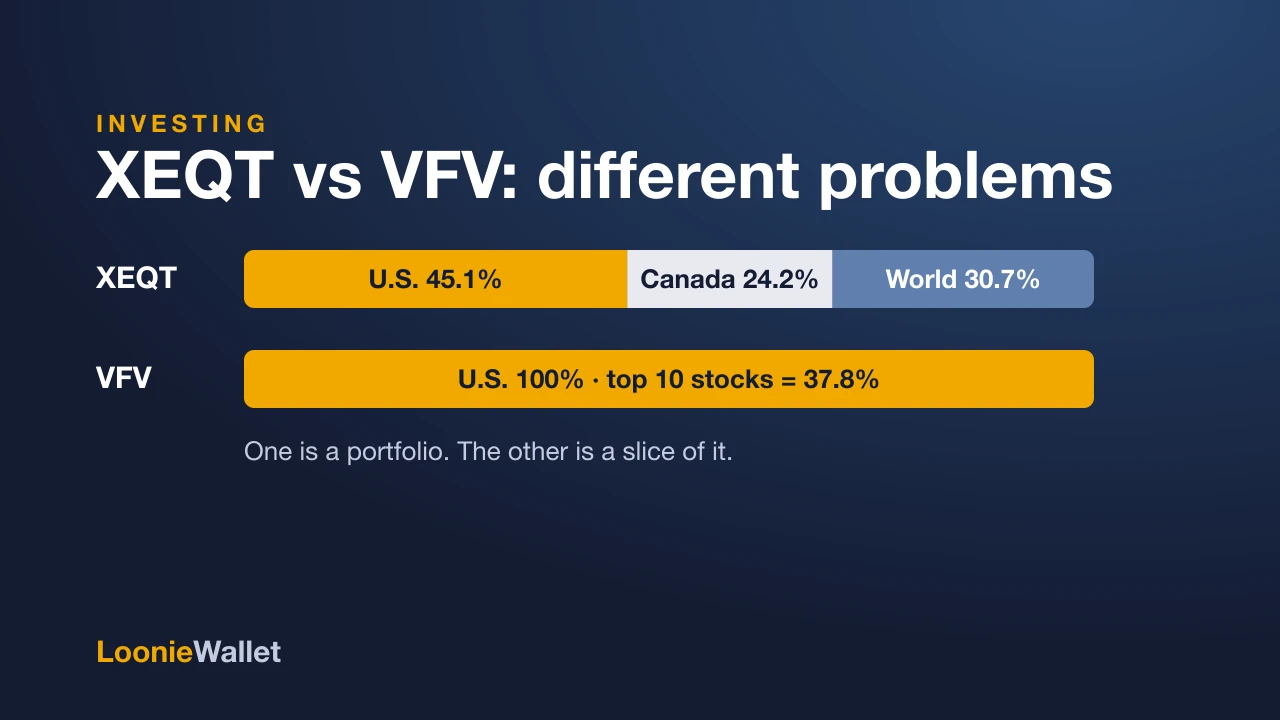
  • Bars comparing XEQT, 45.1% U.S., 24.2% Canada and 30.7% rest of world, with VFV at 100% U.S. and 37.8% in its top ten stocks
    LoonieWallet Team · Investment

    XEQT vs VFV: They Solve Different Problems

    One is a whole portfolio; the other is a bet on 500 American companies, a third of it in ten stocks. Comparing them on past returns misses the point. What each one is, what happens to your U.S. weight when you hold both, and how the withholding tax treatment is the same either way.

    • ETFs
    • Investing
    • XEQT
    • VFV
    • S&P 500
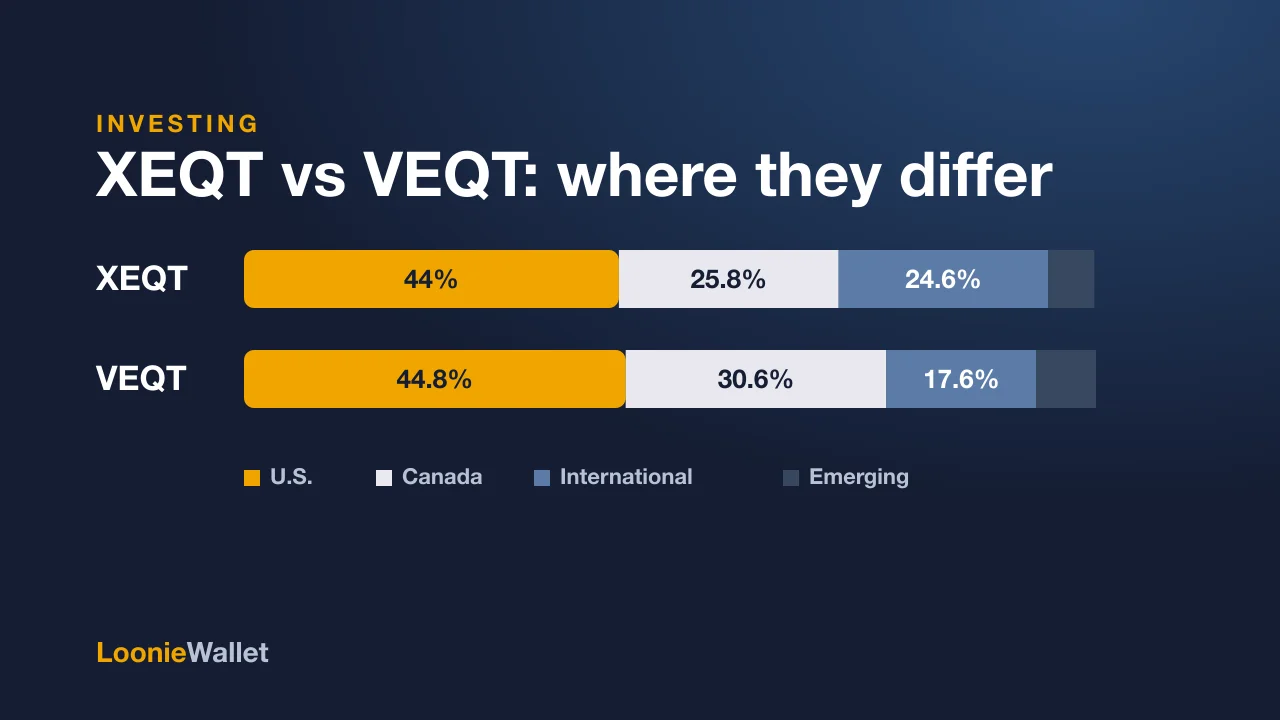
  • Stacked bars comparing XEQT and VEQT by region: Canada is 25.8% of XEQT and 30.6% of VEQT
    LoonieWallet Team · Investment

    XEQT vs VEQT: The Actual Differences, in Numbers

    Same idea, same fee, nearly identical returns. What differs is how much Canada they hold, how often they pay out, and a few basis points of MER that are still shrinking. The verified figures, side by side, and a way to decide that does not involve a coin.

    • ETFs
    • Investing
    • XEQT
    • VEQT
    • Asset Allocation
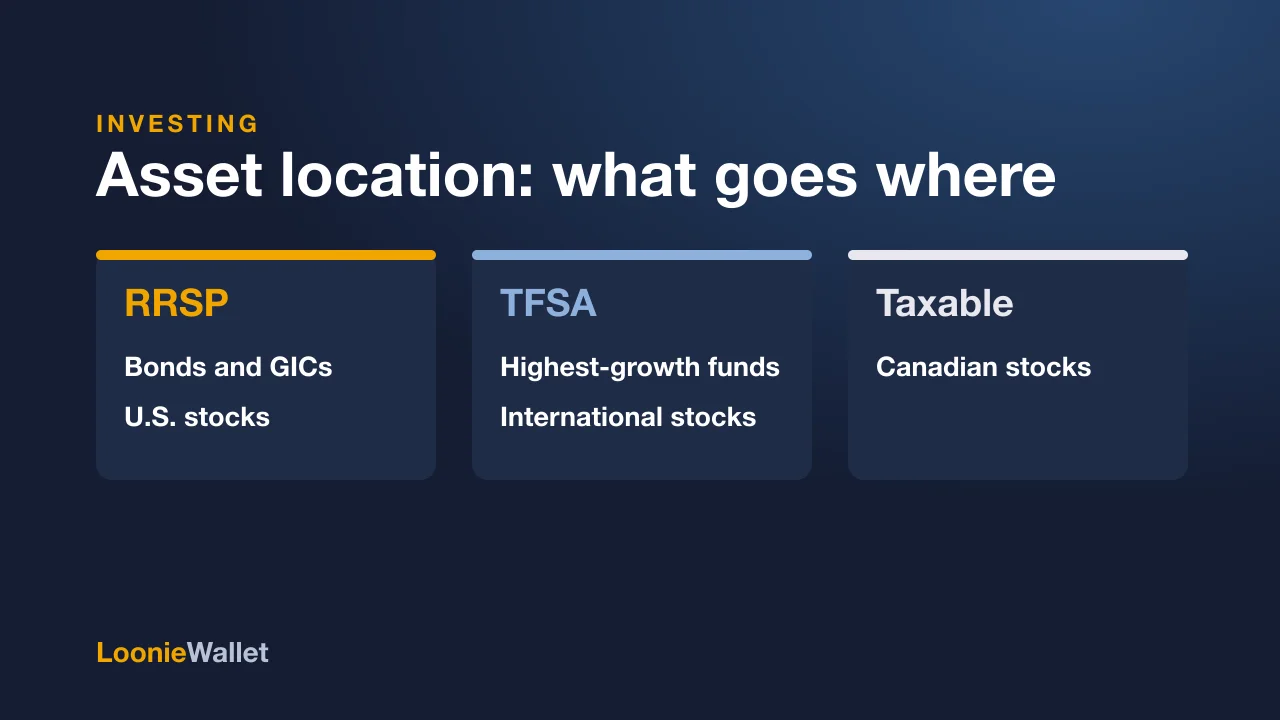
  • Three account cards: bonds and U.S. stocks in the RRSP, growth and international funds in the TFSA, Canadian stocks in a taxable account
    LoonieWallet Team · Investment

    Asset Location in Canada: What to Hold in a TFSA, RRSP and Taxable Account

    Which ETF goes in which account is a tax question with a clear order of operations: fill the registered accounts first, then place the income that is taxed hardest where it is sheltered best. The rules that decide it, a worked example, and why the answer for most people is simpler than the forum threads suggest.

    • Investing
    • TFSA
    • RRSP
    • ETFs
    • Tax
    • Asset Location
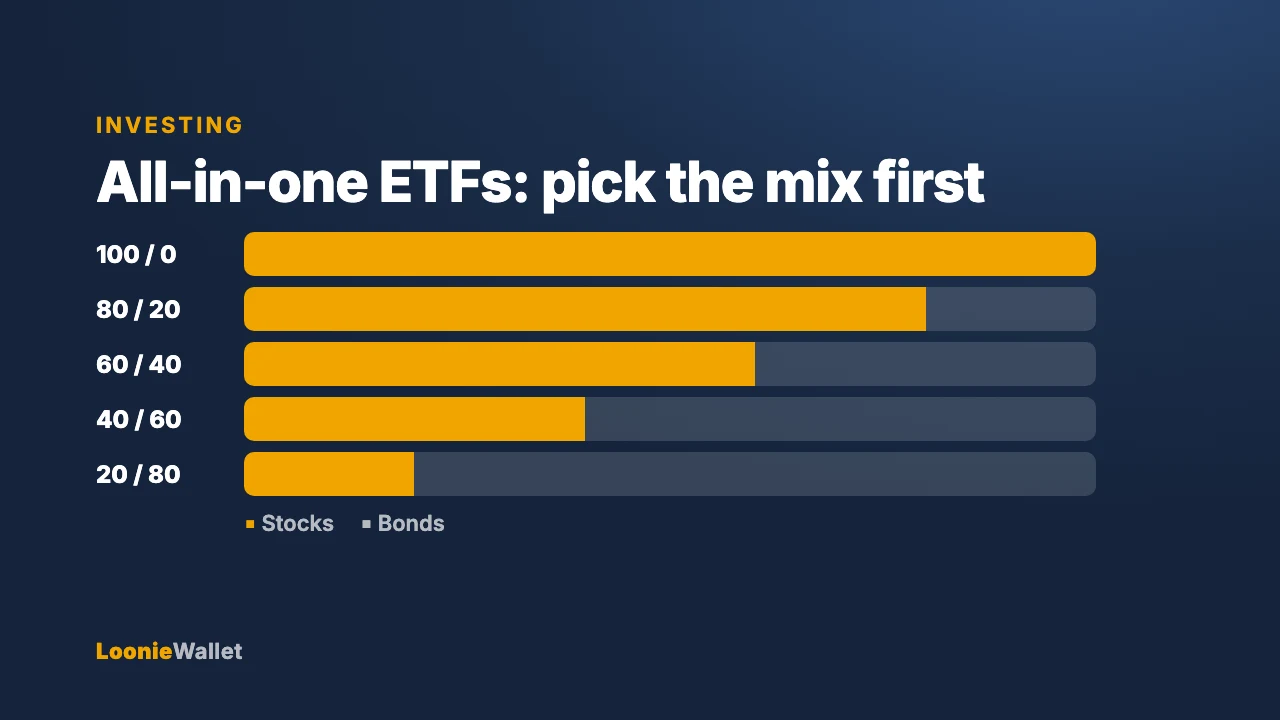
  • Bars showing stock and bond mixes from 100/0 to 20/80
    LoonieWallet Team · Investment

    All-in-One ETFs in Canada: How to Choose Between XEQT, VEQT, VGRO, XBAL and the Rest

    One ticker, a whole portfolio, rebalanced for you. The choice that matters is your stock-to-bond mix, not the issuer. Every iShares, Vanguard and BMO asset-allocation ETF with verified fees, what actually differs between issuers, and a calculator for what the fee gap costs.

    • ETFs
    • Investing
    • Asset Allocation
    • XEQT
    • VEQT
    • VGRO

Newer posts

Older posts
LoonieWallet
Terms of Service · Privacy Policy
Company
  • Blog
  • About
  • Disclosure
Calculators
  • All Calculators
  • Mortgage Affordability
  • RRSP Tax Refund
  • Budget Calculator
  • Retirement Calculator
Popular Guides
  • FHSA Guide
  • TFSA vs FHSA
  • Mortgage Renewal Checklist
  • Wealthsimple Tax Review
  • Wealthsimple Chequing
  • Start an Online Store
Copyright 2026 · All rights reserved.